
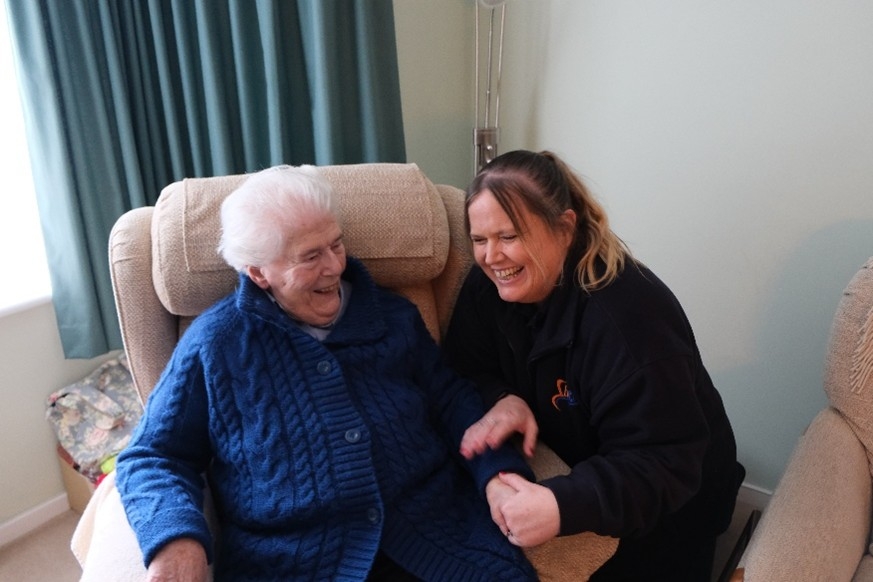
Staying at home is often the preferred option
When care becomes necessary, many families assume that moving into a care home is the next step. However, for many people, high-quality care can be delivered safely and effectively at home.
Home care allows individuals to remain in their own property while receiving the support they need. This avoids the disruption of relocating and helps people maintain independence, familiarity and control over their daily lives.
The advantages of care at home
Home care offers personalised, one-to-one support that is centred entirely around the individual. Unlike residential settings, care at home is not shared across multiple residents. Support is shaped around personal routines, preferences and needs.
Remaining at home means:
- Maintaining established routines and lifestyle
- Staying close to family, neighbours and community
- Receiving dedicated one-to-one attention
- Preserving independence wherever possible
- Avoiding the emotional and practical impact of moving
Care can range from occasional visits to more regular daily support and plans can adapt as circumstances change. This flexibility allows care to grow alongside needs, without giving up the comfort and stability of home.
Many families are surprised by the level of support that can be safely delivered at home, including personal care, mobility assistance, medication support and companionship.
When might a care home be appropriate?
In some situations, a care home may be the better option, particularly if someone needs constant supervision or a level of care that cannot be safely provided at home.
Exploring home care first can often provide the right balance of safety and independence and in many cases can delay or remove the need for a move altogether.
How Everycare can help
If you’re unsure which option is right, Everycare can help you explore whether home care could work for you or a loved one.
For a friendly, no-obligation conversation, contact Everycare on 01962 842548 or email info@everycarehants.co.uk. We’re here to help you make a choice that feels right.